

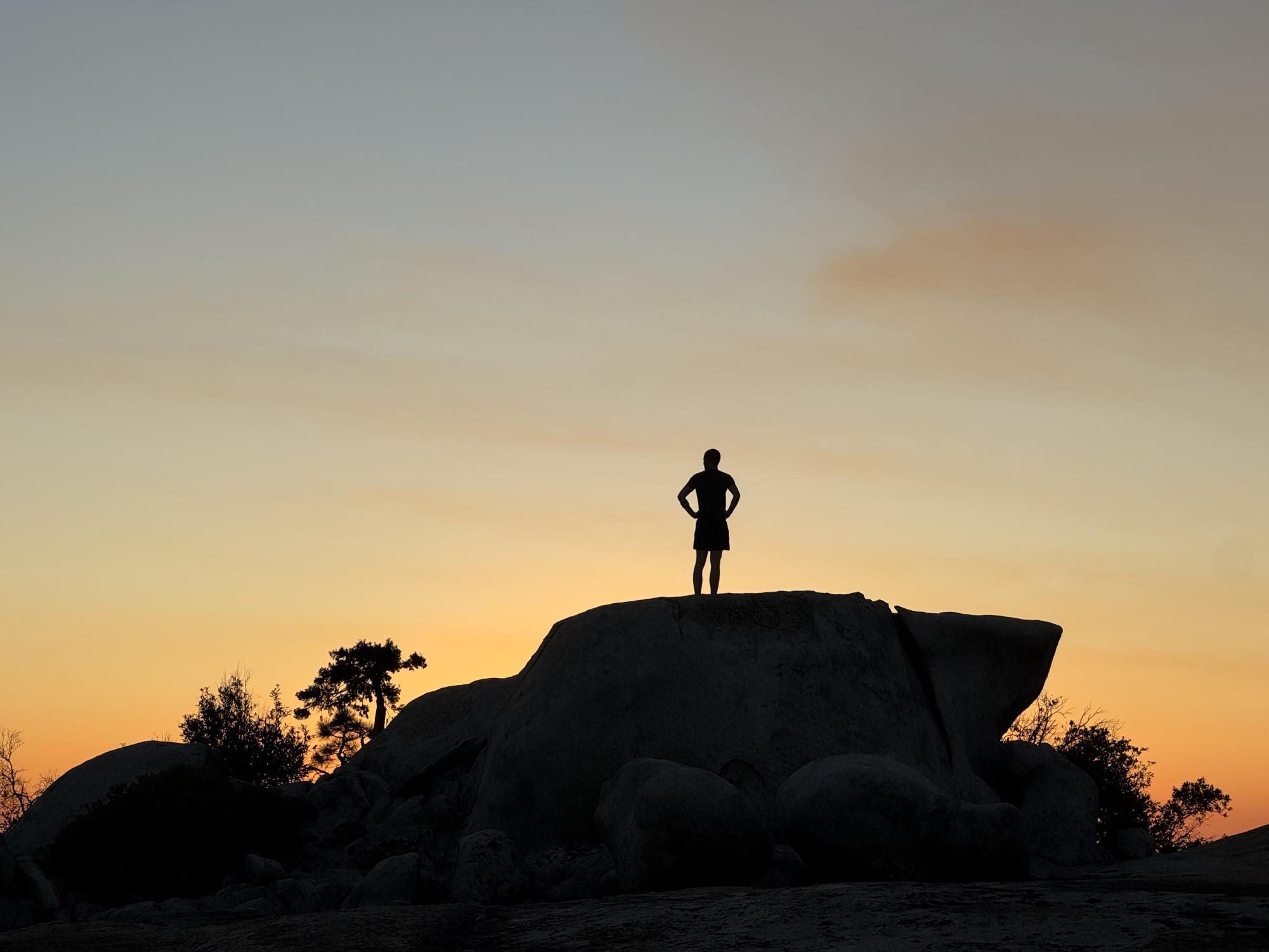

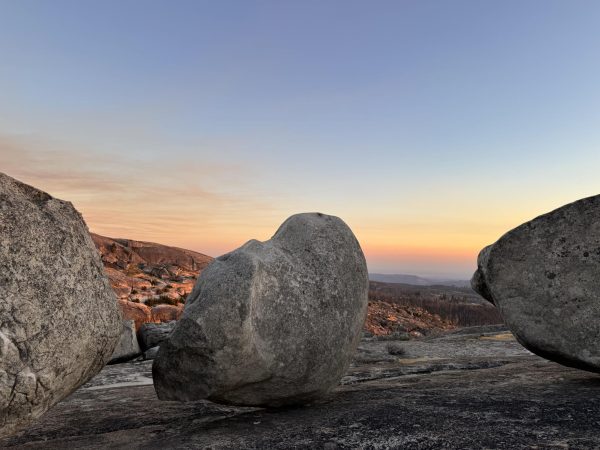
Just above Lake Oroville, near the rebuilding town of Berry Creek, lies an exposed granite batholith called Big Bald Rock. Nestled into the 1,146,000-acre Plumas National Forest, Bald Rock — commonly mistaken with Bald Rock Dome — is a place rich with history, interesting geological formations and plenty of opportunities to explore.
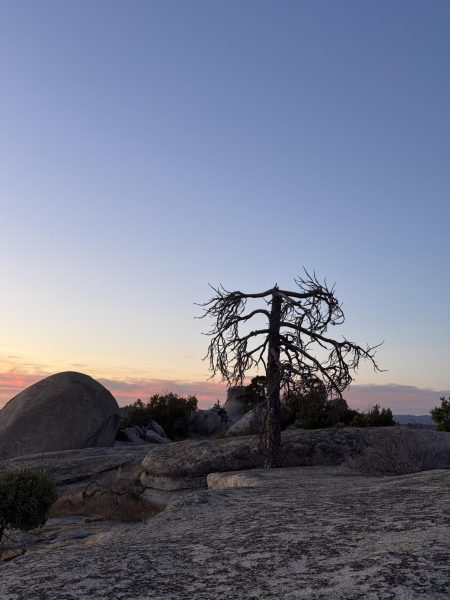
In 2020, the Bear Fire tore through Berry Creek and burned away the towering trees and expansive brush that covered the now-exposed batholith. Now, its odd rock formations and unique environment can be seen from any angle, rich with history to be explored through aimless wandering.
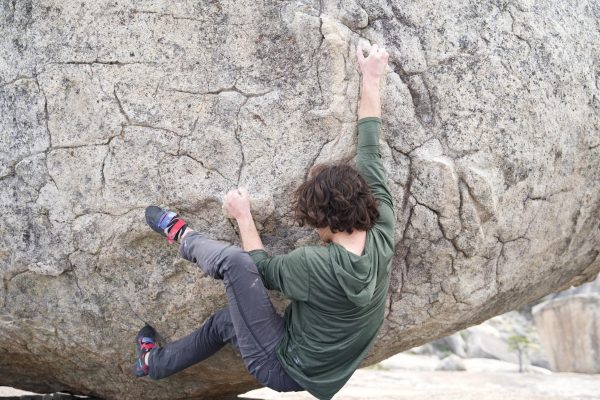
Bald Rock has become my escape from the not-so-small college town that moves too fast. Just an hour away from Chico, I would spend the summer driving up at 5 p.m. to avoid the blistering heat that radiated from the granite. I’d pack water, my bouldering pad, my shoes and the occasional snack, then climb the area’s abundance of boulders until the sun began to set.
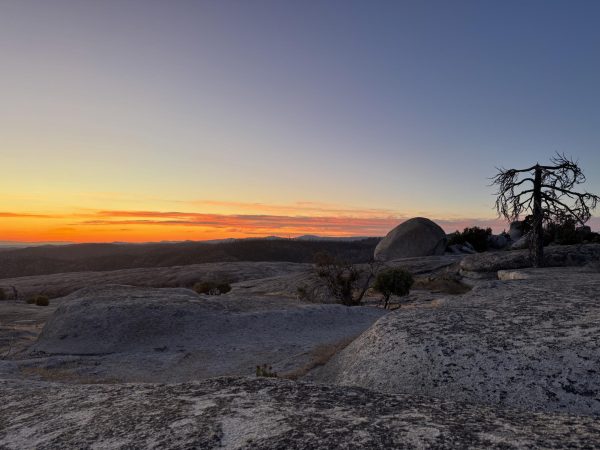
As the sky ignited in a burst of dazzling colors, I would gather my things and sit atop a rock to watch the descending sun fall out of sight. At night, the Milky Way fills the sky as wind rolls over the rock past the fire-scarred trees in the distance. In the morning, the heat rises rapidly, and fog often settles over Berry Creek, hiding the healing town from sight.
It’s places like these that are in jeopardy as the Trump Administration has targeted our public lands through executive orders and funding cuts. While the millions of acres of public lands that were on the chopping block in the new budget bill remain protected, the threats to the Park and Forest Rangers who preserve these lands will still have a lasting impact on these wild spaces.
The Trail to Conservation
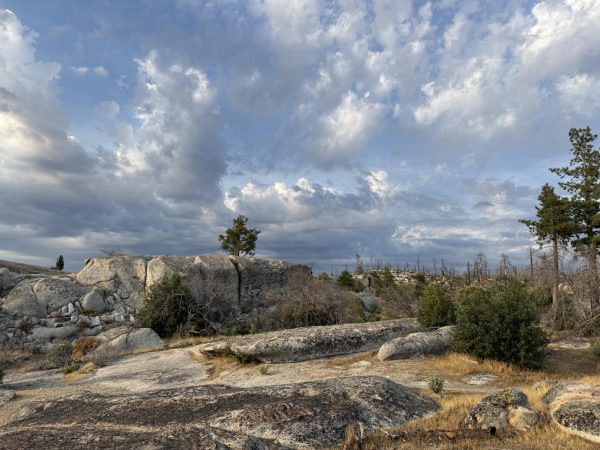
Long before I came to explore Bald Rock, the Maidu Tribe made a home there. Throughout the batholith, you can find grinding holes used by the Maidu. Many of our natural spaces hold their own stories from their original inhabitants. Places like Bears Ears National Monument and Mesa Verde National Park offer unique educational opportunities for people to understand how these regions sustained thriving societies.
Sitting at an elevation of 3,274 feet, Bald Rock was formed about 140 million years ago. It was born from a large body of magma called the Bald Rock Pluton, and as it cooled erosion led to the unique features you can see today.
Conservation efforts were forged over time, too. From the late 1800s to the early 1900s conservationists and preservationists such as John Muir and Gifford Pinchot advocated strongly for the protection of our public lands. They disseminated stories of their journeys and lobbied the government to preserve our natural resources and land from the exceedingly predatory mining and timbering industry.
With time, these efforts led to momentous achievements, such as the Clean Water Act, Endangered Species Act and Land and Water Conservation Fund Act, which have allowed us to enjoy the natural beauty of our country while still acquiring natural resources.
In 1905, the U.S. Forest Service was established, its inception brought on by the public’s growing fears of the lasting damage that mining and timbering were having on our natural resources. Now managing 193 million acres of public lands, the USFS balances recreation, conservation and the harvesting of natural resources, according to the USFS website.
The Tightly Woven Web of Nature
Bald Rock’s strange rock formations are near perfect for a specific form of climbing called bouldering, which emphasizes technical movement on boulders. In the moments between climbing, I take the time to appreciate the environment around me; the rattlesnakes that linger in the crevices, the scarce trees still healing, the large boulders which provide the much-needed shade and strange shapes that play tricks on the mind.
Whether you enjoy climbing, hiking, boating, photography, mountain biking or any other activity that can be done in your public lands, it has come under threat by President Donald Trump’s, “drill, drill, drill” agenda. Despite public backlash leading to the striking of the public lands selloff in the budget reconciliation bill, the Trump Administration is still finding ways to put our places under threat, and one of those ways is the rescinding of the 2001 Roadless Rule – impacting 45 million acres nationwide.
The Roadless Rule was implemented as a way to protect old-growth forests from logging and the development of roads. These wilderness areas maintain the delicate balance of ecosystems and allow for the public to enjoy nature without logging and other harmful industries polluting and damaging the ecosystems of the streams that we drink from, the animals that we admire from afar, and the places we choose to recreate.
The surrounding forests of Yosemite National Park and Sequoia National Park have 400,000 acres of land protected by the Roadless Rule. These undeveloped areas are important to keep those national parks ecosystems thriving.
The potential loss of access to these lands, driven by an administration that seems hell-bent on suffocating our public lands, is hard to grapple with. Resources are something we need; the world would shut down if we ceased all mining and lumbering, but that is something that the USFS is positioned to manage. The USFS works to protect our public lands while overseeing the amount of resources scraped from these areas.
Secretary of the Interior Doug Borgun’s proposed budget holds a 65% reduction in funding for the USFS. This would greatly impact the USFS’s ability to research and protect the expansive land it maintains, including preventing and fighting wildfires.
When it comes to mining, the USFS evaluates the environmental impacts and then makes its own determination whether to approve mining claims.
For timber, researchers in the USFS work to understand threats to our forests, such as Bark Beetles, which have destroyed millions of acres of forests, according to the USFS. Their employees work collaboratively with the timber industry to lessen the environmental impacts. Researchers constantly monitor the health of forests to prevent rampant wildfires and the devastation of our lands.
These public lands are a sanctuary for native species and habitats that are constantly threatened by the endless expansion of our urban spaces. With the looming threat of global warming, it is our forests that do much of the work to keep our impending doom at bay.
Forests absorb billions of metric tons of carbon dioxide a year, according to the United Nations Development Programme. But it isn’t just the work that our forests do to combat global warming. For many, the beauty of our natural lands incentives us to put in the work to keep these lands clean and preserve them for future generations.
Off Trail and On Course for Destruction
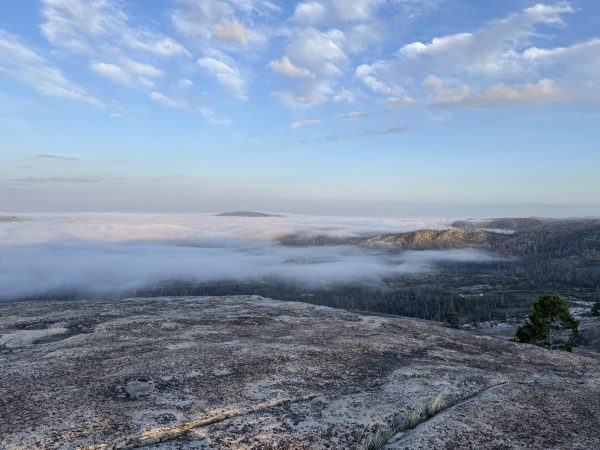
Bald Rock leaves plenty to be explored. Every time I journey up to the peculiar playground, I always find something new. Whether it’s a hut with a fireplace nestled under a boulder, or a rock shaped like a snail, there are plenty of new things to discover. It’s a place that fills your head with questions, a place that you can’t resist to take a moment and appreciate the intrinsic detail of each feature.
There are unique places throughout the country that provide this same sense of adventure and wonder. That is likely why the Antiquities Act was passed by Congress in 1906, securing the protection of historical and archaeological sites. Since its passage, 18 presidents have designated over 150 national monuments that are enjoyed freely by the public.
The Department of Defense recently released an opinion for the Council to the President that allows for the president to revoke monument status, paving the way for protected lands to be sold off to the highest bidder.
Trump is already targeting many of the national monuments that hold not just natural beauty, but also a record that tells a tale of the past. Places like Bears Ears National Monument reflect not only beauty, but the past and the crossroads of conservation efforts, education and indigenous peoples.
The alteration of history is not something to be promoted. Often, these areas are saturated with the blood of our blunders, ones that we need to reconcile with to prevent them from reocurring.
Sadly, it appears that we have shirked our mistakes. The U.S. Department of the Interior’s Secretarial Order 3431 asks visitors to report anything that doesn’t “ … focus on the greatness of the achievements and progress of the American people or, with respect to natural features, the beauty, abundance, and grandeur of the American landscape.”
With the reduction of over 3,000 USFS and 1,000 National Park Service employees, these places will not be as well-kept as they previously were.
The damage following the Bear Fire remains prevalent. The USFS is quickly losing employees that are certified to combat wildfires. With the decline in qualified staff, it isn’t just our public lands and the species that inhabit those spaces that are in jeopardy; it’s also towns such as Berry Creek and other wildfire prone towns.
The USFS is the world leading researcher for wildland fire, according to the USFS website. The forest service creates detailed maps of high-risk areas to help mitigate fires. After a fire, the forest service performs assessments of burn areas leading to informed decision making for communities and industries.
The Bear Fire began in Plumas National Forest on Aug. 17, 2020 due to a lightning strike. The fire was seemingly under control until winds abruptly ramped up. The fire jumped across the Feather River and ultimately killed at least 15 people and destroyed “almost every structure in the 525-person community,” as was reported by the Sacramento Bee.
As the town is being rebuilt, the trees and shrubbery are healing at and around Bald Rock. The federally mandated reduction in staffing leads to a harder time managing our public lands for both the ecosystems and visitors that come to enjoy the area. The full-force movement toward mining and deforestation, with a harsh disregard for the environment and global warming, puts places like these in jeopardy – while Big Bald Rock is not currently under threat, to me, it’s what brings empathy to the forefront for the people who are losing the spaces that they care most about.
So please, find a reason to care for your public lands. It wasn’t an effortless fight for our dedicated stewards of the natural environment to protect these spaces so that we could enjoy them today. They are yours to recreate, enjoy, and protect, and they are threatened with the stroke of a black Sharpie.
Chris Hutton can be reached at [email protected] or [email protected]

Lisa Hutton // Sep 8, 2025 at 5:33 pm
This article is outstanding and so important. Well done!