


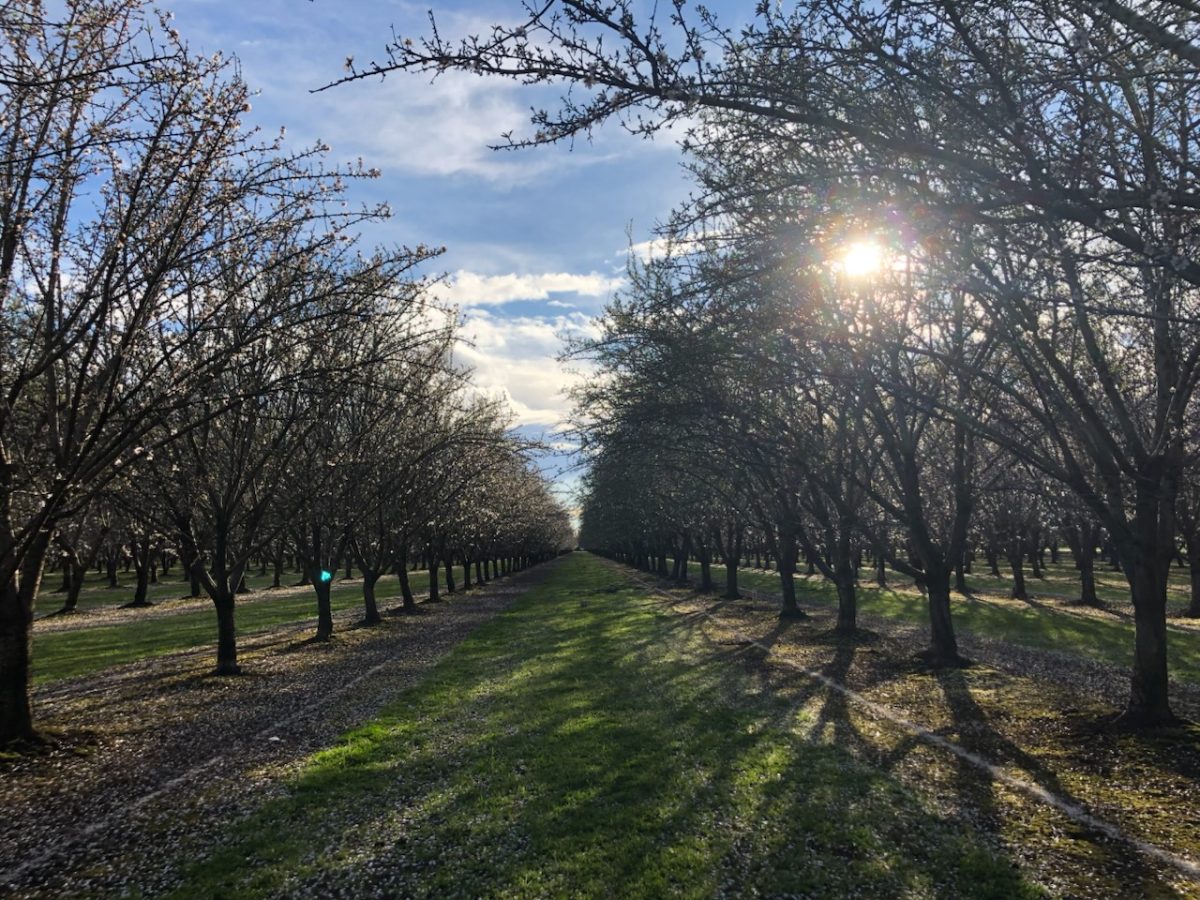
To set students on the path toward progress in sustainable farming, the Chico State College of Agriculture has expanded its pursuits to undergraduate students through a new course, Plant and Soil Science 260 Foundational Principles of Regenerative Agriculture.
During this course, “students explore how regenerative agricultural systems differ from conventional methods, emphasizing sustainability, soil health, ecosystem restoration, biodiversity, and resilience,” according to the University Catalog.
The college has consistently dedicated itself to better farming through its organic dairy unit, organic vegetable unit and soil carbon sequestration project. It also reaches out to the farming community through its Center for Regenerative Agriculture and Resilient Systems, offering online courses, certifications and workshops for farmers who are eager to learn how to improve their farming methods but are unsure where to start.
Now, undergraduate students have an opportunity to be connected to this growing field of agricultural improvement as well.
According to Cynthia Daley, a professor of the course and the Director of the Center for Regenerative Agriculture and Resilient Systems, PSSC 260 is one of eight new agricultural courses recently designed for students. It is a condensed, more student-friendly version of the senior-level Plant and Soil Science 450 Advanced Regenerative Agriculture Management course, designed for freshmen and sophomores who want to learn more about the field.
I attended PSSC 260’s early morning lecture to get a firsthand look into what students are learning about this developing field.
All three professors of the course, Cynthia Daley, Lindsey Hethcote and Raquel Krach warmly welcomed me into their classroom. The class was reviewing the film “Common Ground,” discussing the roles individuals and the government play in our current agricultural and food distribution systems.
Another key factor discussed was the importance of approaching farmers, especially those from older generations and minority communities, and offering them the knowledge and support they need to make the switch from conventional to regenerative. In a follow-up interview, Daley emphasized the importance of reducing financial risk for farmers when transitioning to regenerative, instead focusing on building “an implementation strategy that enhances their operations.”
Following the class discussion, Daley presented a lecture about building up soil resistance and health over time through various methods, such as stopping tilling, planting cover crops and utilizing livestock integration. The end goal is to build up the microbial ecosystem of the soil, allowing for better plant growth and less environmental impact.
For a student who was not enrolled in the class, I was greatly invested in the lecture because I noticed how the different pillars of agriculture are connected, including my own major, animal science: pre-vet, in which I have learned how sustainable livestock management is related to animal health.
According to Denise Crosswhite, an academic advisor in the College of Agriculture, there are 30 students currently enrolled in PSSC 260. The most common major is plant and soil science, along with seven agricultural business majors, seven agricultural science majors and one animal science major. However, in the future, it could attract other environmental science, biology and chemistry majors, given how all those disciplines are intertwined.
Emilia Milton, a second-year animal science major enrolled in the class, said, “I joined the class because I had an interest and [was] worried about how to grow our food in a way that’s different from conventional methods.”
In an interview, Daley emphasized the importance of arming students with knowledge of new regenerative farming and management techniques in order to accommodate real-world farmers in a variety of circumstances, especially as the industry moves forward at a lightning pace.
“We’re going to apply those practices to this farming system, depending upon the context, really depending upon what the goals are for that particular property, and the cropping system in the soil type, and really the grower and what the grower wants to do,” she said.
Through this course and with the work of the College of Agriculture, students are being taught a new way to improve agricultural quality. Successful harvests and results are achieved not by farming, but through cultivating.
What does this look like? Based on my conversation with Daley and what I learned in the lecture, it involves well-researched and experimented techniques such as reducing soil tillage and nurturing environments for healthy, productive microbes to thrive and serve crops. It looks like using livestock as personal landscapers, their feeding behaviors promote better plant growth and soil longevity. It means giving nature the tools it needs to succeed so farmers can take a step back.
“It’s more of a natural approach where you’re working together with, you know, the ecological cycles of a landscape and trying to enhance it, you know, with your management and your stewardship, as opposed to, you know, manipulating it, or controlling it, or bending it to your will,” she said.
Elena Mendonsa can be reached at [email protected].
