


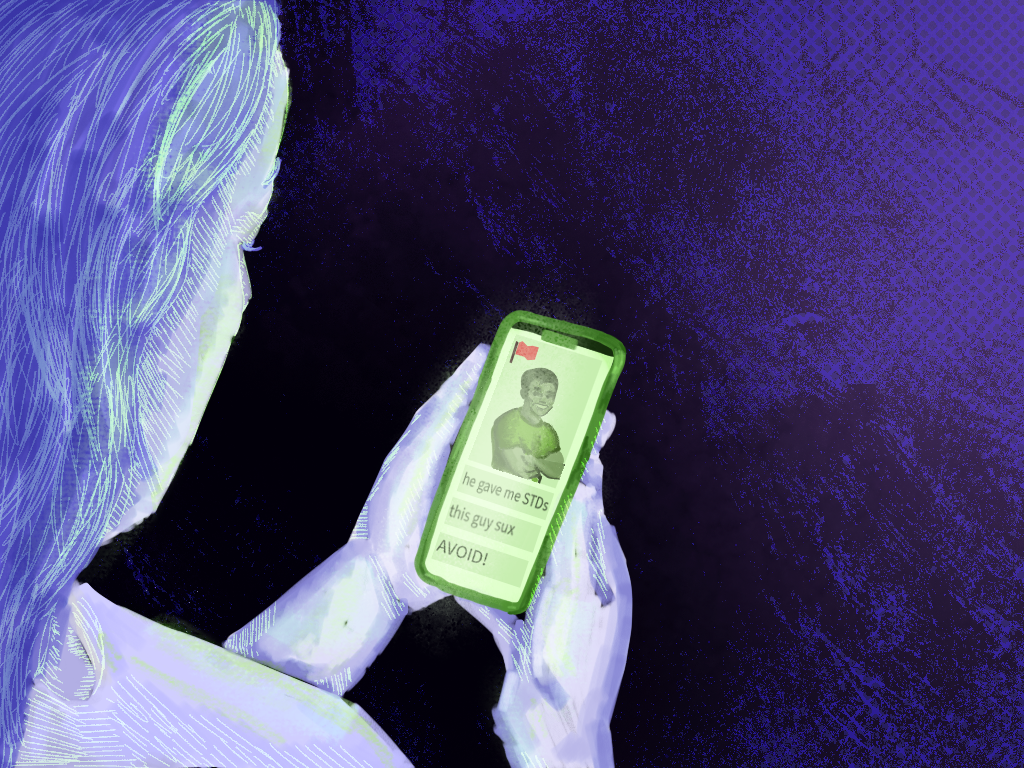
Dating apps, such as Tinder and Hinge, can lead to many problematic situations. A date can quickly end up in an uncomfortable position where a man has been aggressive, misleading or lied about their identity, and many people have been catfished or scammed in various ways.
This is what led Tea founder Sean Cook to create the app that soared to the top of the charts. Tea is an anonymous dating app that allows women to provide feedback on men. The app that now boasts millions of users nationwide.
After Cook’s mother was catfished, she expressed worry about the safety of online dating and had a harder time trusting people. Seeing the effects this had on her, Cook built Tea with a mission statement to “revolutionize dating safety by equipping women with cutting-edge tools, real-time insights, and a powerful community to navigate the modern dating world with confidence and control,” according to the website.
However, women’s safety has been called into question because of the app.
In late July, the Tea app faced a data breach in which over 70,000 user images were leaked, initially reported by 404 Media. The drivers licenses and selfies the app claimed to have deleted after use of verification were released alongside metadata containing chat history and locations of the apps users.
A user named Sally in this BBC article explained she had downloaded the app for safety in the online dating scene after being stalked by an ex-boyfriend. Her address was leaked.
Chico State student Jenna Ruthven said she had learned of the app through YikYak and decided to download it. “I really do like the idea. It’s a goofy app, but it’s good to let people know what you do.”.
The Tea app allows users to gain insights on the experiences women claim to have had with men in the area. Some people use the comments to poke fun at someone’s appearance, while others share stories about nightmare dates and even instances of sexual assault.
After downloading the app, you set up your anonymous profile by creating your anonymous screen name, location and completing a “facial screening.” Once you submit your photo, it goes into review. In this process, the app uses artificial intelligence to determine whether you are female.
With the range of comments, Ruthven shared skepticism about the app’s culture, “I can see it being anonymous cyber-bullying,” she said.
As the app is a realm of hearsay, there is relatively no avenue for fact-checking the information posted. For both the person being posted and the person doing the posting, it is on a merit-based system where users rely on both parties to be transparent.
In an interview with a male Chico State student, who requested to remain anonymous, he had been posted and received many unflattering comments about his character. He said that these comments caused him “emotional distress and turmoil.”
He had learned from one of his friends that he was posted. “It was funny at first, until the post started getting more serious.”.
He explained that he was approached by strangers at parties, telling him that they knew him from the Tea app.
As a result, he reached out to the Tea via email on Aug. 26. He explained that the app was being used to “tear men down.” About 24 hours later, the post about him was taken down, but he received no reply.
“In theory, an app where people can spread warnings about men is a good idea,” he said. “But in reality, the app is used to spread misinformation without consequences.”
Since then, he saw no trace of his name on the app until the week of Sept. 15, when he was reposted, with the comment section questioning why the original post about him was taken down.
He said he is sending another email to get this one taken down as well.
Tea has guidelines for posting. Users cannot post last names, contact information, social media handles, women or underage men. Posts can also be taken down for harmful content and bullying, including statements that are untrue.
There are no policies and procedures publicly available for how Tea determines which content on the app is factual and accurate.
When it comes to defamation, the app is protected from lawsuits by Section 230 of the Communications Decency Act, which protects online platforms from liability for user-generated content. However, it is possible for individual users to be sued by a plaintiff if defamatory content or comments are published.
The blockade to this is that all posts are made anonymously — for women’s safety. App users are unable to tell who is posting, making it difficult to fact-check what is being said.
Another male Chico State student was not aware he was posted until being interviewed. He requested anonymity because of the claims under his post.
“Because it comes from anonymous sources, not everything is proven true,” he said. “[It’s] like YikYak — just to bash men.”
With women anonymously posting and commenting, a question of credibility is raised. Anyone could post anything about each other, without a way to prove their point or story. The app seems to be helpful in the case of posting a man’s picture to see if anyone else is dating or sleeping with him.
Cook gave the app an appropriate name when he used the word “tea,” which could insinuate drama or gossip.
Ruthven said that she hasn’t posted anyone or commented on anyone’s posts for fear of another data leak. “I have been very careful with the app.” She called it her “once-a-week scroll.”
Once in the app, users are greeted with photos of men, starting at the age of 18. Users can scroll through photos, ages and comments posted about men from different cities around you. Users can also click on the “filter” icon to change the range of ages, along with the distance from the user’s location.
There is also an option to search names through the app to see if a certain person was posted.
There is a detective icon on the bottom of the screen, and once the user enters this part of the app, they can enter someone’s phone number for a background search, check on sex offenders in your area, and even check criminal records. But it comes at a cost.
When users try to click on these options or enter a phone number, the app tells users that they are unable to access this information unless they make a payment of $14.99 per month, when accessing a list of sex offenders on Megan’s Law is offered for free.
It’s hard to know who to believe when things are made anonymous, but trust your gut whenever you can and stay safe.
Is the app worth it? Is there a better way to handle the issues in today’s online dating scene?
Ultimately, when the app is used wisely, it can be beneficial for users, but when placed in the wrong hands, it can do more harm than good.
Josephine Bowman can be reached at [email protected].
