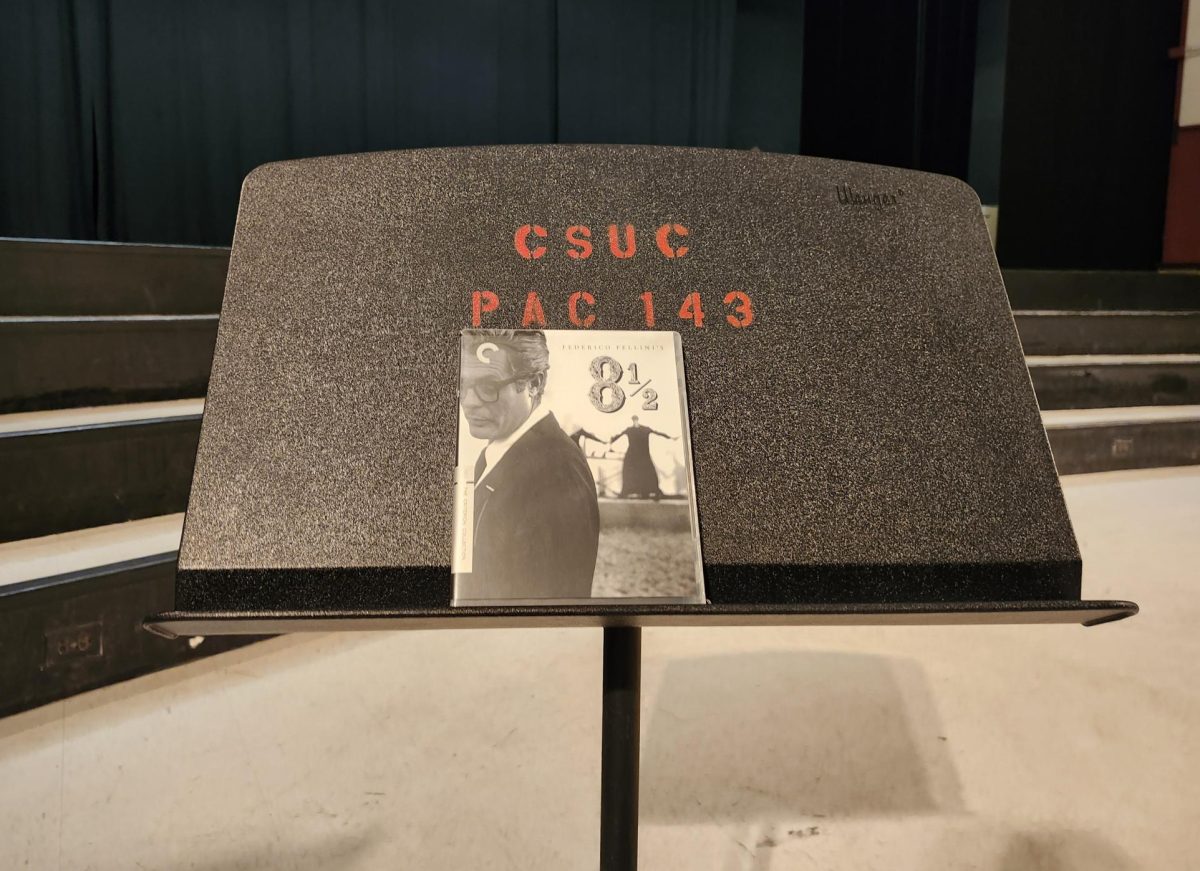
The University Films Series shows that art is motivated by memories and dreams.
On Tuesday, the University Film Series screened “8 ½,” directed by Federico Fellini, an Italian director known for his dreamlike cinematic style. This being his ninth film, was released in 1963 and is considered by critics to be his masterpiece, blending realism with abstract and subjective filmmaking techniques.
This was the first film in the series shown this semester that aligned with the theme of retrospection.
The event started with an introduction from Rob Davidson, a professor of English and the film series’s co-director. He talked about how, after the release of “La Dolce Vita,” Fellini faced writer’s block and struggled coming up with his next film. The frustration inspired Fellini to make “8 ½.” The film presents themes of creativity and memory, and throughout, those memories play an instrumental role in moving the plot forward.

“8 ½” follows the story of Guido Anselmi, played by Marcello Mastroianni, a director in the process of making his next big film. However, the character faces a serious case of writer’s block and it halts the creation of the film.
The title, “8 ½,” is not actually related to the film itself. It represents the number of movies Federico Fellini made up until this one.
The film works as a commentary on the sexism in Italy and the Italian film industry at that time. Guido is a control freak; he is someone who treats all the women around him horribly. However, his womanizing backfires and he is faced with the consequences of his actions.
The film Guido is trying to make is largely influenced by the memories from his childhood. The “8 ½” brings this to life through abstract flashbacks and dream sequences.
The film relates to the human experience of creativity.
“Guido, when he’s running out of ideas or when he feels pressured or anxious, he retreats into memory,” said Davidson. “I’m very aware of the ways that artists freely draw from their own experiences, but then transform it.”
Fellini is no stranger to this; he took his writer’s block that was afflicting him and turned it into meta commentary about being a filmmaker, said Davidson.
“I hope that the message is universal. It’s definitely rooted in Italy, in a certain time period,” said Davidson. “But I think the reason this film has lasted is because it has some kind of timeless message about the artist.”
The film series exists to uplift the arts and show the public films that relate not only to artists but to people in general. So, introducing old classics to those who may be unaware is part of their mission.
As Davidson said during the film’s introduction, there will be two other films shown this semester. The second one will be “Princess Mononoke” directed by Hayao Miyazaki, and will be shown on Feb. 17. The final one that is going to be shown this semester is “Mulholland Drive” directed by David Lynch, and will be shown on March 24.
All three of these films were chosen not only to promote the arts but to represent and explore the theme of retrospection.
Braeden Raley can be reached at [email protected]