


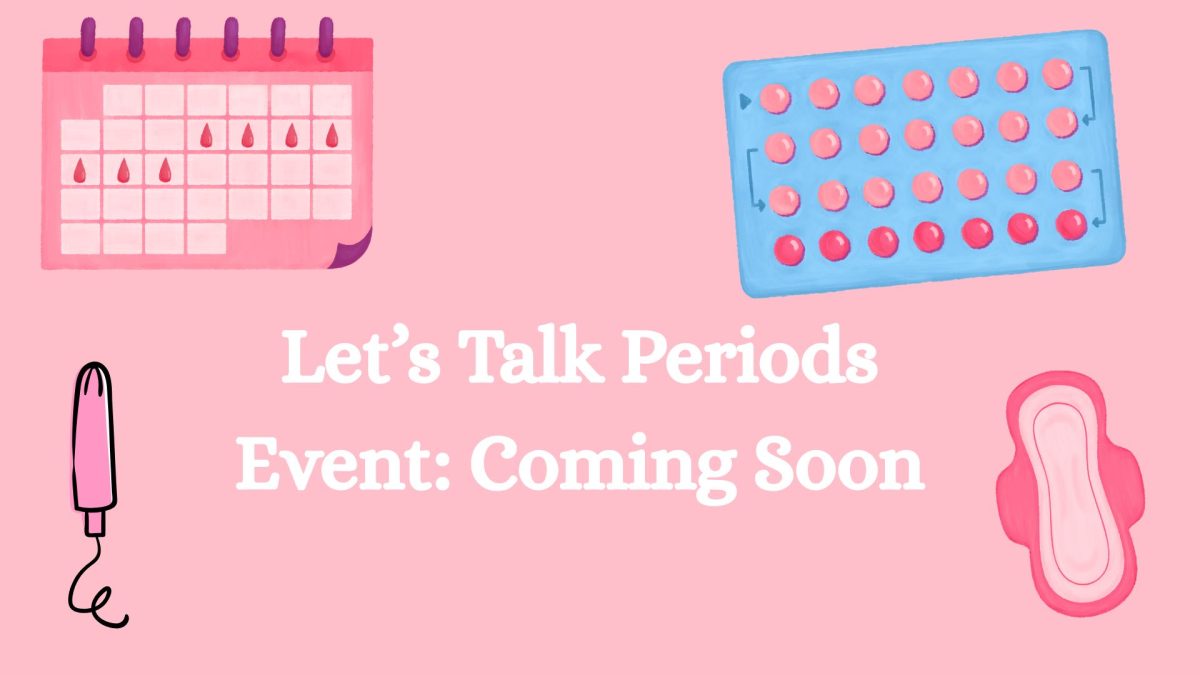
If you’ve ever missed class because of painful period cramps, Googled birth control side effects, or felt confused tracking your cycle, a new menstrual health event at Chico State hopes to give students a place to talk about it.
The event aims to create a welcoming space where students can learn more about menstrual health and ask questions they may feel too nervous to ask elsewhere. Discussions will cover topics such as menstruation, endometriosis, cycle-tracking apps, and period poverty. Healthcare providers will be there to answer questions in a conversational setting.
The event will include free food, a raffle for gift cards, and period underwear.
“Let’s Talk About Womyn’s (spelled alternatively to promote inclusivity) Health Periods,” later shortened to “Let’s Talk About Periods,” will take place on Wednesday, March 11, from 1:30-3:30 p.m. in Colusa Hall Room 100. The event is hosted by the WellCat Health Center, Chico State’s Gender and Sexuality Equity Coalition, and the Cross-Cultural Leadership Center.
Isabella Requiro, a health care educator focused on reproductive health and Chico State’s college ambassador for the Endometriosis Foundation of America, shared that her own experience with endometriosis inspired her to help lead the event.
“Six months ago, I was diagnosed with endometriosis and had surgery,” Requiro said. “I had been fighting for a diagnosis for the last 10 years. I was told that it was all in my head. I was constantly in the emergency room and constantly agonizing over the blinding pain during my period. This is something I never want anyone else to go through.”
Requiro said that her goal, working at the campus health center and planning events like these, is to help students understand their bodies and the importance of self-advocacy when something feels wrong.
The event is co-led by Alma Miranda, a program planner for the Cross-Cultural Leadership Center, whose work has been influenced by her experiences having to navigate women’s health, especially feeling poorly educated on birth control and period products before coming to college.
Both organizers’ experiences aren’t uncommon when it comes to menstrual health issues, which is why they hope this event will provide students with reliable information and hold a space for open conversations. Having health care providers present in a relaxed, campus setting may also help students speak up about things they might otherwise feel awkward about doing in a more clinical setting.
Access to credible, in-person information is increasingly important as more people turn to their screens for health advice. According to FLO Health, one in five women relies on social media and online forums for information about menstrual health. This can contribute to the spread of misinformation, such as advice from influencers without medical expertise and the risk of self-diagnosis, which may delay people from seeking proper care and cause unnecessary worry.
Conversations about endometriosis are particularly important on college campuses. According to the World Health Organization, about one in ten people assigned female at birth globally live with the condition.
Endometriosis causes severe pain during periods, sex, and even bowel movements, which significantly impacts quality of life. Despite affecting 190 million people globally, it receives less research funding and public attention than other illnesses with a similar prevalence.
“College years fall right within the average 7-12 year diagnostic gap between symptom onset and diagnosis, making campus awareness a critical turning point,” Requiro said.
Without open conversation and accessible education, menstrual health issues are often overlooked. Painful period cramps, especially among young women, are frequently dismissed as “normal,” and added stigma can make it harder for students to identify the issue and seek proper care.
Requiro emphasized that healthcare providers gaining an increased awareness of menstrual health and endometriosis is an important part of addressing the issue at its core. She noted that women’s health care providers and OB/GYNs at the WellCat Health Center are now well-educated enough to spot the symptoms of endometriosis early on, in order to respond to student concerns faster.
“When students feel believed, supported, and have access to informed healthcare, outcomes improve dramatically,” Requiro said.
A second women’s health event by the same organizers will happen on April 15 at Selvester’s Cafe. The event will focus on sexual health and will include therapists, social workers, and women’s health care providers to create an open forum discussion around sexuality, sex, STIs, and menopause.
Lucy Bakowski can be reached at [email protected]

Kristin // Mar 9, 2026 at 5:24 pm
Thank you for opening up this conversation. Knowledge is power well written & researched. Great event for Chico!!