


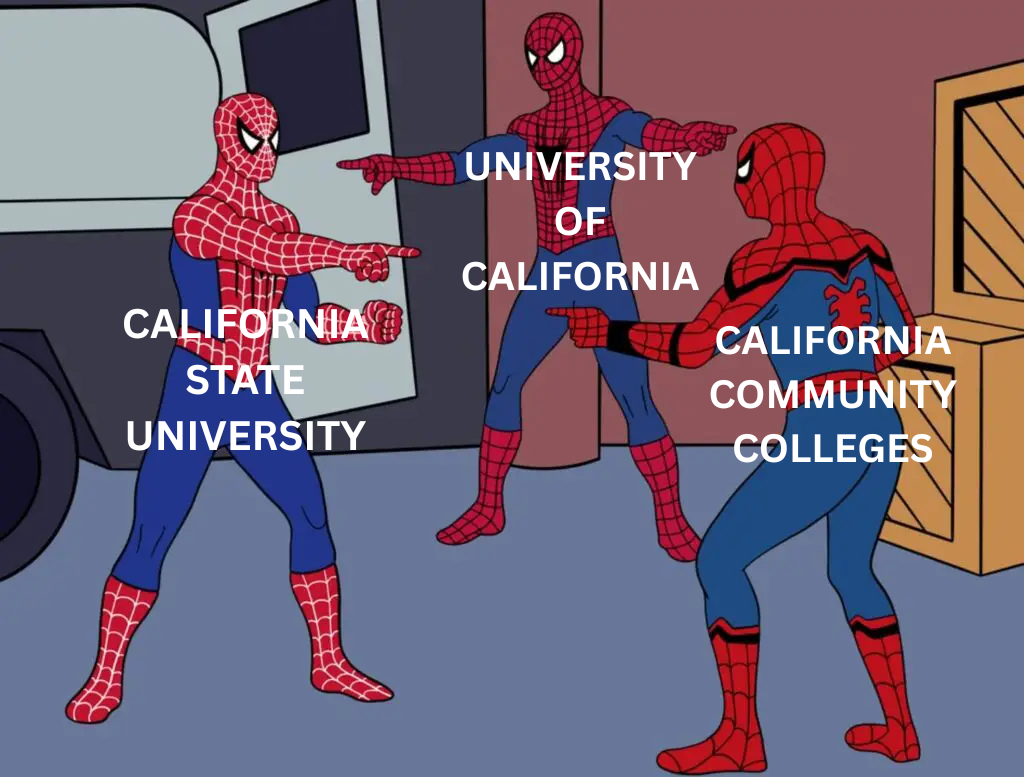
Legislative efforts to make college more accessible by expanding community colleges’ ability to offer bachelor’s degrees are clashing with the California State University system’s mission to do the same.
More than 50 bachelor’s degree programs have been approved and are currently offered at community colleges, while many are still in limbo due to protests from California State University. CSU administrators have argued that community colleges should not replicate any CSU programs.
The mission statement of the California State University system states a desire “to encourage and provide access to an excellent education to all who are prepared for and wish to participate in collegiate study.” But mission statements don’t acknowledge the reality of the collision between different educational institutions.
A recent analysis by the non-profit WestEd suggests that the community college’s location is paramount and that new programs would have little impact on any CSU that is not near the community college.
In 2021, an assembly bill was passed allowing California community colleges to create bachelor’s degree programs, provided they can demonstrate a need for workers in a specific industry. But they are not allowed to offer a program if a similar one exists elsewhere in the state.
The Chancellor of the California Community Colleges is responsible for approving the programs, provided they first consult with the Chancellor of the California State University, the President of the University of California, and the President of the Association of Independent California Colleges and Universities, according to the bill.
In 2024, Governor Gavin Newsom vetoed two bills that would have allowed community colleges to offer bachelor’s degrees in nursing programs.
In February, Assemblymembers David Alvarez and Esmeralda Soria announced a trio of assembly bills they hope will “expand access to affordable bachelor’s and doctoral degrees aligned with workforce needs,” according to a press release.
One bill would allow CC’s to offer bachelor’s degrees unless it would create duplication with a CSU in the same geographic region. Another would allow CSU to award doctoral degrees, without needing approval from the University of California.
“Students should not be forced into expensive private institutions or out of their region because of rigid, outdated rules,” Alvarez said.
The third bill would authorize a pilot program that allows up to 10 community colleges to offer a bachelor’s degree in nursing.
“AB 2301 offers an affordable option for aspiring nursing students in California’s underserved and disadvantaged communities. This Nursing Education bill is desperately needed throughout the entire state,” Soria said.
The bills will be working their way through the legislative process this spring, but like previous bills, Governor Newsom could still choose to veto them.
The new assembly bills, combined with WestEd’s analysis, could lead to more educational programs than Californians previously had access to, while filling gaps in different workforces across the state.
“While there have been duplication concerns raised that have gone unresolved, the overall track record of working collaboratively with the CCC is strong. More than 8 out of every 10 proposals for community college bachelor’s degree programs have been either fully supported by the CSU or ultimately resolved,” a spokesperson for the CSU Chancellor’s office told The Orion. “We are aware of the Assembly bills that have been introduced, but at this time the system has not taken a formal position on the proposed legislation.”
Sean Shanks can be reached at [email protected].
