


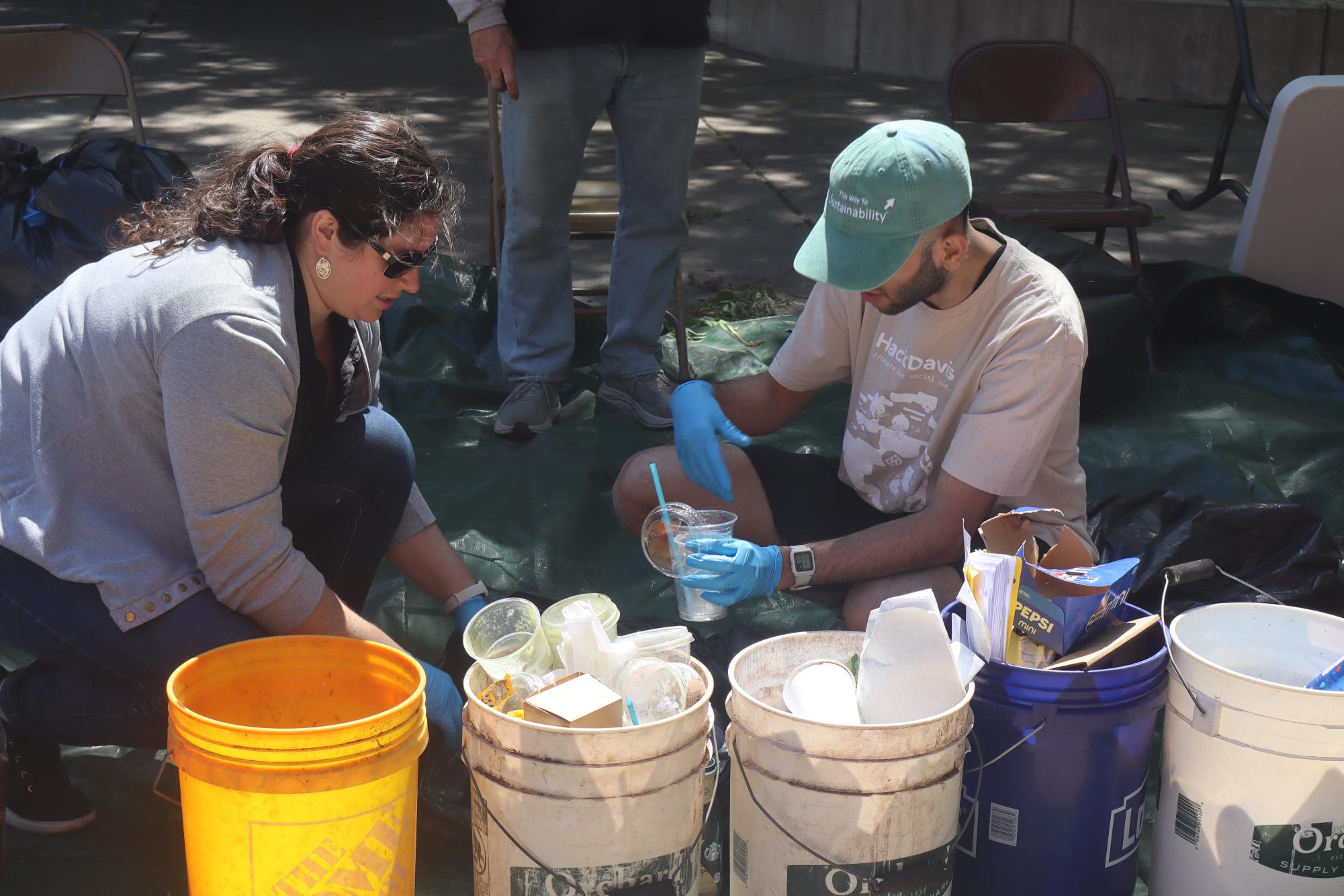
You threw away trash in the wrong bin and thought nobody was watching. Turns out Green Campus was, and Thursday was its annual trash audit of Chico State University.
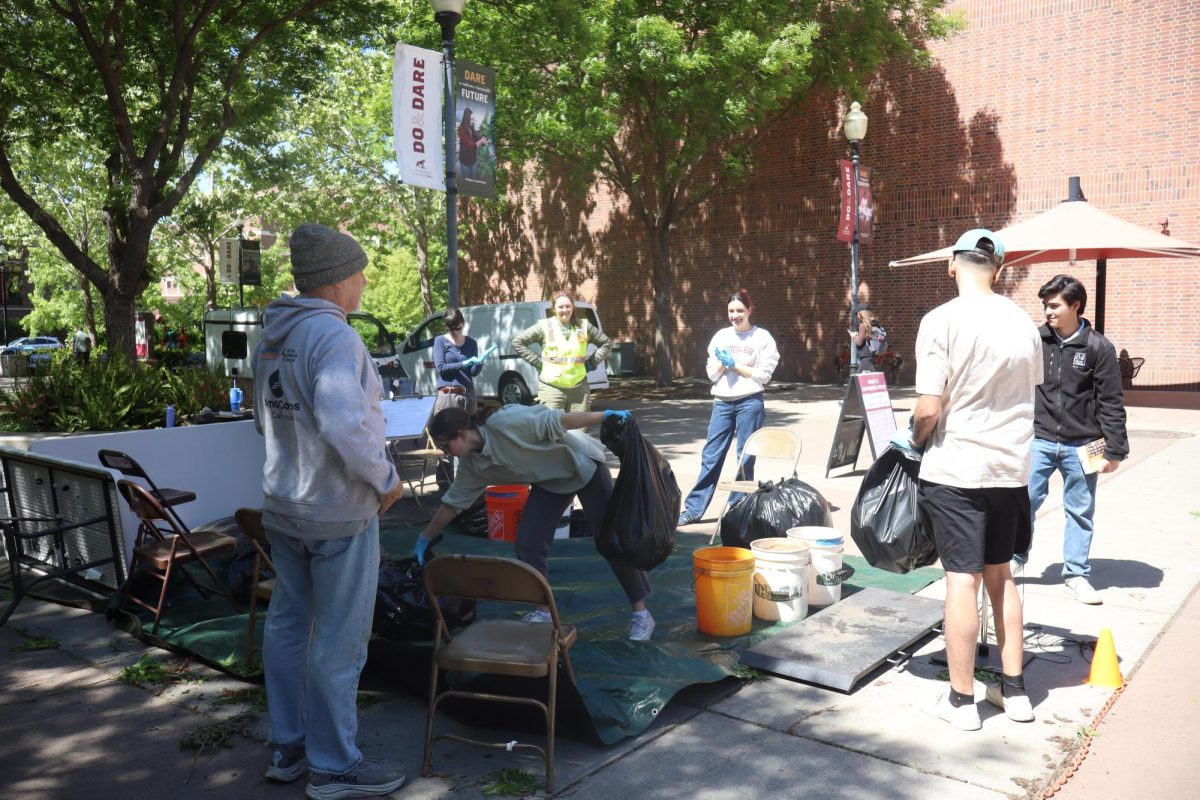
A green tarp laid in front of the Student Services Center, with a team of students, faculty and staff sorting, organizing and weighing trash bags. These bags came from three locations on campus: Behavioral and Social Services Building, Éstom Jámani Resident Hall and the University Services Building.
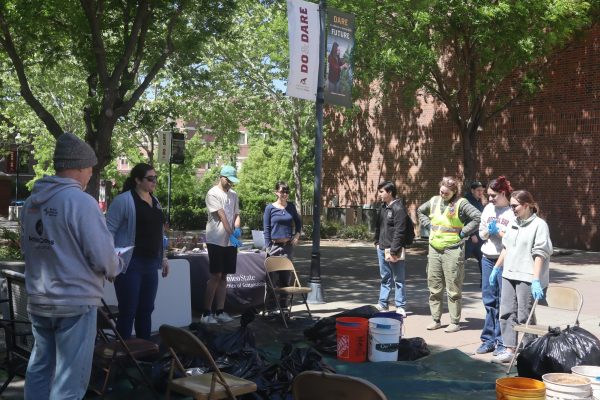
Bella Dobbelaere is the zero-waste coordinator for Green Campus, a student-run sustainability program. This was her second year doing the audit.
“We sort the trash so it’s better for the environment, and to make our campus more sustainable,” she said.
One of the ways to improve sustainability is by ensuring liquids aren’t reaching the recycling, she said.
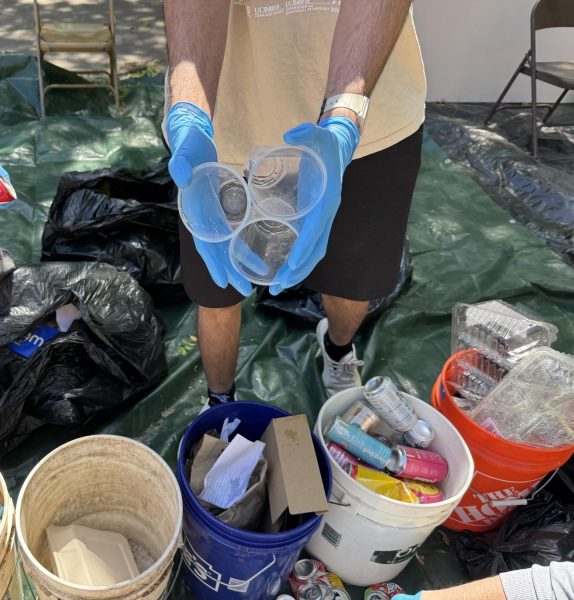
Liquids contaminate recyclable materials and, by extension, the bag. Just one cup that spills liquid can send an entire bag to the landfill, Dobbelaere said. This year, one of the bags from BSS contained five pounds of liquid.
Those five pounds contaminated three pounds of potentially recycled items.
“When people throw away cups with liquid they’ll throw it away in recycling,” she said. “That could be improved if people knew to throw them out in the trash.”
For Green Campus’s program advisor, Mark Stemen, contamination isn’t only a behavioral problem, but an infrastructure one too. He said better signage would help ensure more recyclable materials are repurposed into something else.
That signage will soon come to various areas around campus.
Stemen said Green Campus was awarded a $5,000 grant through Associated Students to add temporary signs addressing issues identified during the audit. Next year, instead of choosing a new area to pull trash from, Green Campus will pull from the same locations to see if the signs helped.
“The controversial item is the little plastic coffee cup that you can get at Common Grounds and Lovebird,” Stemen said.
He said that despite it being a No. 1 plastic, its “flimsy” structure jams up the machinery when recycled. It’s like gum molding around your teeth; the machinery doesn’t break it down properly.
Rachel Ostrander is a zero-waste specialist with Recology, a waste management service. One of her responsibilities is informing the community about zero waste. She said Green Campus’s insights would help inform Recology’s future outreach.
“We can help guide them to choose items that are either recyclable or compostable,” she said. “We’ve seen some of them choosing items that say they’re composable, but they’re not to California’s requirements.”
But the university performed better than last year, Dobbelaere said. But there’s still room to improve, such as putting cups with liquid in the trash instead of the recycling bin.
“Waste isn’t just trash,” Stemen said. “It’s also evidence.”
Chris Hutton can be reached at [email protected]
