


Silence has always been one of the loudest voices when it comes to conversations about sexual violence, but at Chico State, students are refusing to stay quiet.
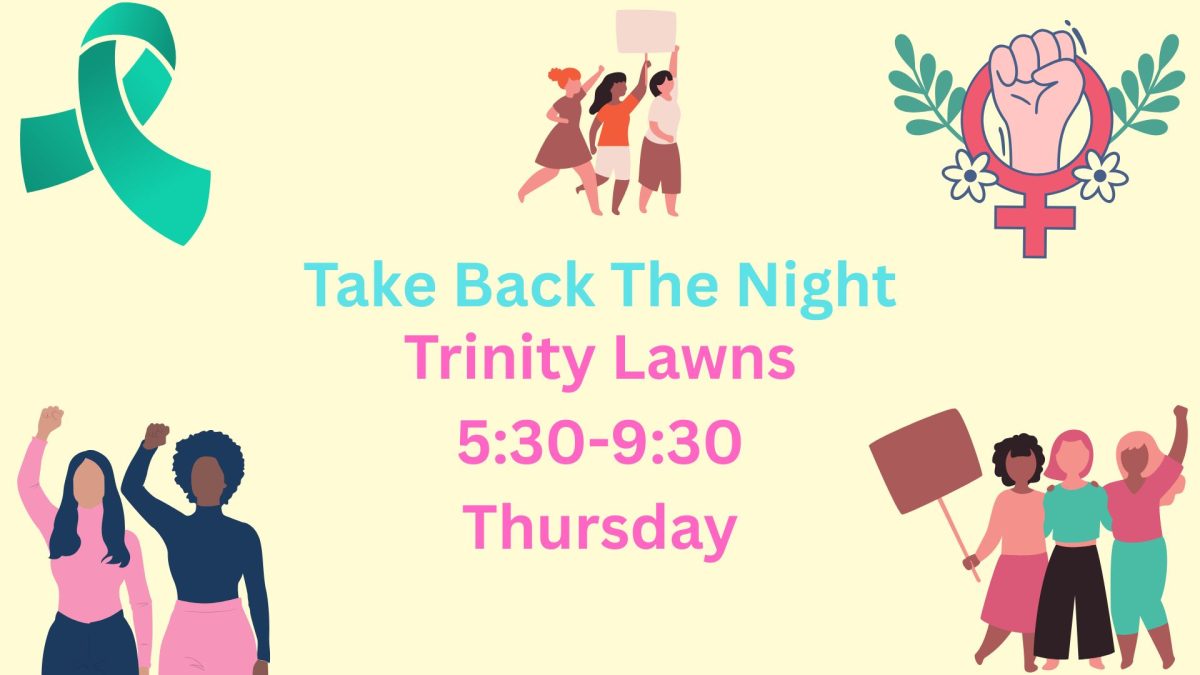
On Thursday evening, the annual “Take Back The Night” will transform Trinity Lawns into something louder than silence, into a space for grief, anger and support to uplift voices. From 5:30 to 9:30 p.m., students, faculty and community members will gather in a collective call for activism and change.
“It’s a moment where everyone’s voice collabs as one,” said J. Loyola-Gaytan, a sophomore and intern with the Gender and Sexuality Equity Center. “[It] speaks for people who have been silenced and turned away when making accusations.”
That collective voice is intentional and is meant to break the isolation that often surrounds sexual violence, from the resource tables to the speakers and the march. Take Back The Night is the oldest worldwide movement dedicated to ending all forms of sexual violence, beginning in the ‘70s as a response to public outrage over violence against women in larger cities in the United States and by the ‘80s was a nationwide organization. In 2001, Take Back The Night Foundation was formally established.
Local and campus organizations will be tabling to offer trauma-informed support, counseling organizations, student clubs and resource centers. This will also provide attendees with direct access to counseling services, advocacy services and practical support resources like pregnancy tests and drink spike testing kits.
“It’s a way of letting people know that there’s support. There’s always going to be support in one way or another,” said Snehitha Gorantla, women’s program coordinator for GSEC.
The event will open with “Take Back The Mic,” which is one of the program’s biggest events. This is an open-mic portion where survivors and allies can speak, perform or read in whatever format they choose.
This is used as a time to speak out against sexual assault and provide the opportunity to have people tell their personal experiences, though it can also be used to talk about other important topics that are affecting the community.
“I’d say one of the most powerful tools we have is holding our peers accountable, and the more people that speak out on campus who are students,” said Maureen Galves, women’s program coordinator for GSEC.
This is a way of directly combating the silence and untold stories surrounding sexual assault, which add to the stigma of fear, distrust and victim-blaming. In fact, globally, only 12% of sexual assault cases are reported, which is only 6.1% of female survivors and 1.2% of male survivors reporting to the police.
“We want to make sure they know their voices are heard,” Galves said. “I think it’s important for us to have kind of an outlet for people and give them the chance to speak out about what they really feel.”
GSEC emphasized that, especially with it being sexual assault awareness month, it is a hard time for a lot of people, making it important for people to have the opportunity to speak out in a safe and supportive environment.
“It holds a lot of value in that we are telling everybody here that there are people who want to listen to you if you’re trying to speak up and there are people who support you,” Gorantla said.
After “Take Back The Mic,” there will be an introduction to what the event is about and that it was put on by GSEC, who have spent months preparing for this event extensively, starting in early February, including social media outreach, class talks and organizing tabling and the march, GSEC interns explained.
Then there will be a keynote speaker, Audrey Denney, who was chosen as this year’s speaker to represent women’s empowerment and is also one of this year’s Democratic candidates running for the U.S. House of Representatives to represent California’s 1st Congressional District.
“We really wanted someone that kind of portrayed the idea that we want women to be perceived as something powerful and not just like one of the lesser of the two genders,” Galves said.
After the keynote speaker, there will be a march to end sexual violence through campus, which is an annual event.
“I’m really excited for the whole thing, but I’m really excited for the march. That’s probably going to be one of my favorite parts,” Galves said.
As people unite to march, the main theme is the community’s response to protest together.
“It says that there is a community on campus and you don’t have to be scared if you want to share your story and if you want to come out and want to get justice for yourself,” Loya-Gaytan said.
“The biggest thing I want people to really know is that you don’t have to suffer in silence, and whether or not that’s something catered towards you, I think it’s important to step up and use your voice,” said Joerly Johnson, GSEC intern and Chico senior.
Even though it’s just a one-night event, there is always help available through programs like Catalyst and Safe Place, which also offer trauma-informed specialists available for Chico State students.
“If someone is anxious about this topic or if it has personally affected them and they just want that extra precaution and safety, we have the stuff for them here,” Gorantla said.
The GSEC resource center, located in Chico’s Behavioral Science Building, provides easy access to those programs and offers free menstrual and sexual health resources.
Lucy Bakowski can be reached at [email protected]
