


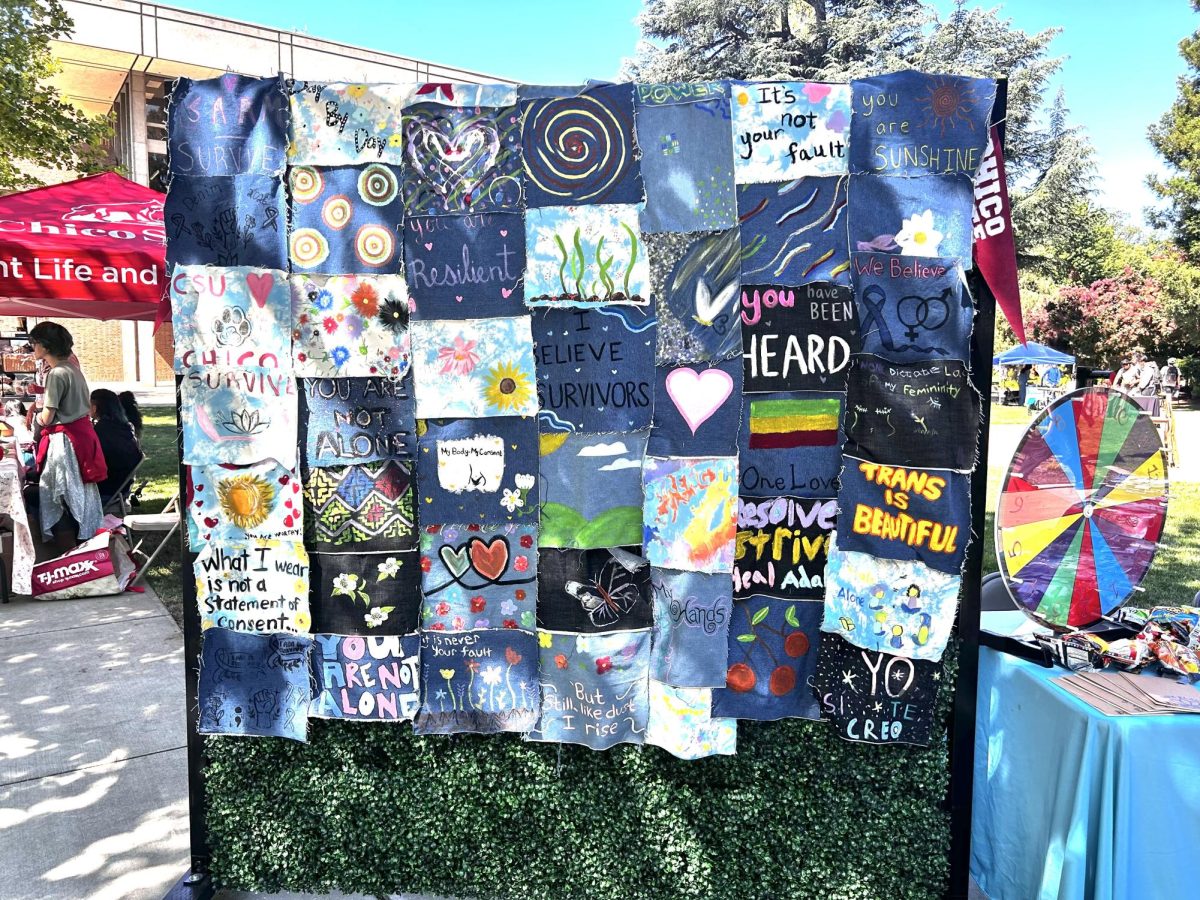
April stands as Sexual Assault Awareness Month and this year, April 29 marks the Denim Day protest on campus, allowing students to stand in solidarity with survivors of sexual violence.
Denim Day encourages people to wear denim as a symbol and statement against the harmful myths and victim-blaming that occur when there are cases of sexual assault. This campaign originally traces back to 1999, when the Italian Supreme Court overturned a rape conviction, arguing that the jeans the victim wore were too tight to be taken off by someone else, which implied consent. This sparked outrage, causing an uproar of activism worldwide. This later became known as the “jeans alibi” rape ruling.
As a result, wearing denim has now become a symbol of protest. Chico State staff, students and organizations are all able to take part each year. This day isn’t just about clothing; it allows for a shift toward conversations that may be uncomfortable. However, these conversations are critical in playing a key role in challenging misconceptions surrounding sexual violence and creating a supportive environment.
At a campus booth for Denim Day, Advocacy coordinator Elia Hernandez has two books displayed for the event. Books such as “All About Love” by Bell Hooks, as well as a book titled “Unbound” by the founder of the “Me Too” movement, Tarana Burke. All of which are meant to highlight themes of healing, how society understands love and relationships, and how these understandings have developed over time.
“So people understand what Denim Day is, why it’s so important,” Hernandez said. “It’s a sexual assault awareness campaign that’s actually worldwide. It’s such a big thing to show support to survivors, even in minuscule ways like wearing your denim on Denim Day.” Said Hernandez. This was part of many events hosted by Chico State’s “Safe Place.”
The initiatives on campus for events like this for Sexual Assault Awareness Month are meant to address the unspoken issues, including stigma, the barriers that survivors face and the underreporting that comes as a result. Creating clear and collective opportunities for participation helps signal to survivors that they are not alone in their journeys.
Students and advocates alike showed the wide range of services available for support. One of these services is Catalyst, an organization that helps survivors of both domestic assault and sexual assault. “We have a shelter for survivors, transitional housing, we help with restraining orders, therapy services and SART (Sexual Assault Response Team) that will be with survivors who go through the medical exam,” said Aralyn Penaloza, who manned the Catalyst booth alongside Skylar Millsaps. Immediate help is always an option with Catalyst. “We have a 24-hour line to get others connected,” said Millsaps.
The Wellcat Center also had a booth, staffed by Lead Health Educator and Head Program Coordinator Isabella Requiro, which had plenty to offer. “We’re here with Safe Place showing support, we’re letting students know what resources we offer and letting them know how to stay safe,” she said. Products being given to students included fentanyl tests, naloxone rescue kits and drink spike tests.
Participation in Denim Day can be simple, yet still have an impact. Wearing denim, taking part in the exchange of resources as well as information, contributes to a much larger cultural shift, focused on support for all victims. For many, Denim Day serves not only as a reminder of past injustice but also as a call to action and an encouragement for victims to come forward without feeling alone or judged.
Bria Martinez can be reached at [email protected]
