During the government shutdown from Oct. 1 to Nov. 12, working families, single-parent households, college students and more Americans who participate in the Supplemental Nutrition Assistance Program relied on food banks, churches and other community resources to keep food on the table while benefits were halted.
Chico’s local agriculture and the Wildcat Food Pantry also stepped up to serve its students and other community members during the uncertain time.
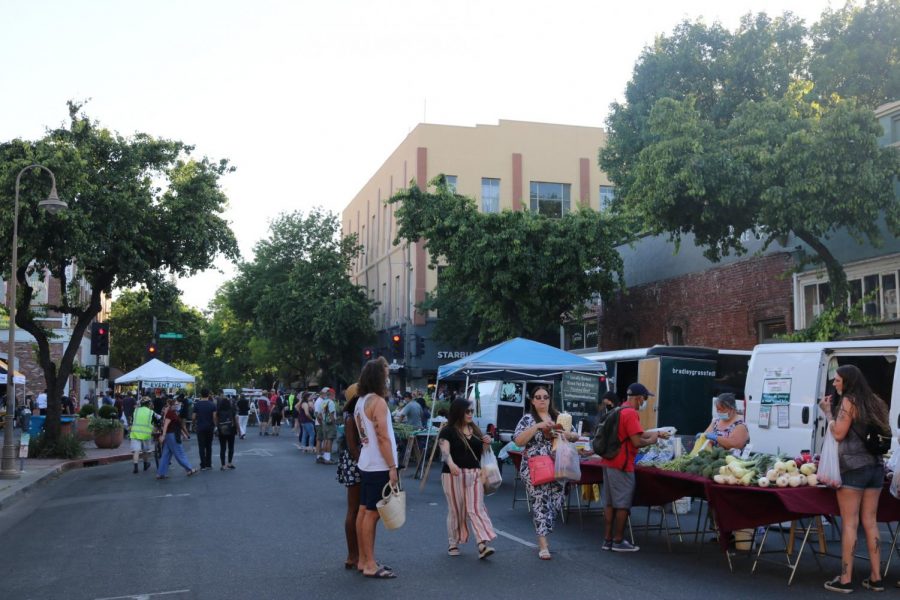
Chico Certified Farmers Market routinely accommodates customers who use EBT in its year-round market, said Marketing Manager Yusra Shelton. Customers can exchange EBT for tokens, or “market bucks,” to buy groceries at various stalls with the same rules that apply to grocery stores, such as not being allowed to buy prepared food.
During the government shutdown, the market raised funds through GoFundMe for customers who rely on EBT. Shelton estimated that the funds could serve 360 individuals. According to the market’s Instagram page, “Every customer with an active EBT card can get $15 in tokens — no purchase required … Tokens can be used at any CCFM market and are valid through January 31, 2026, or until funds run out.”
According to the market’s GoFundMe, the original fundraising goal was $20,000, but only $4,353 was gathered with only 56 individual donations. Despite not meeting the goal, the page says all funds will go towards EBT customers. As of now, donations are paused.
“We have our EBT customers [that] make up 30% of the business done in our market,” Shelton said. With the collective agreement of the market’s executive board, the market decided to support that customer demographic during the shutdown.
“It’s slowing down over the last few years,” Shelton said regarding the market’s customer flow. Despite the slower business and income, she is hopeful that the market continues to serve Chico and “make it more of a community space.”
The Wildcat Pantry was another critical lifeline for food-insecure students during the shutdown. The pantry purchased discounted produce from the Chico State University Farm. “The University Farm, and specifically the Organic Vegetable Project, provides produce to the Hungry Wildcat Food Pantry at a 5% discount from the public price, and we purchase everything directly from them,” said Basic Needs Director Leah Slem. The Organic Vegetable Project provides about 15% of the pantry’s produce, including kale, lettuce, chard, cabbage and others, she added.
“Most of our produce donations come from the Food Bank of Contra Costa and Solano, the North State Food Bank, 530 Food Rescue, and the Church of Jesus Christ of Latter-day Saints, with additional support from the North Valley Food Hub, the University Farm (during peach season), and local community members’ gardens,” Slem said.
During the shutdown, the pantry saw a 20% to 25% daily increase in students, estimated to be around 130 additional students a day, she said. To keep the pantry stocked, the pantry ordered more food and utilized donations from other food banks, especially protein and produce products. Slem and her team also rallied the help of staff and community volunteers to keep the pantry running.
The numbers don’t lie when it comes to the seriousness of the food insecurity problem among Chico State students and reliance on the Wildcat Pantry, especially during the SNAP withholdings. According to Slem, half of Chico State’s student population experiences food insecurity, and the number of students applying for assistance increases about 25% every year. 1,300 to 2,000 Chico State students receive SNAP benefits, which is out of an approximately 14,000 enrolled students. During the shutdown alone, around 600 more students applied for food assistance.
“Perhaps most importantly, we know that our Chico State community — faculty, staff, and local partners — will rally fast to support students. During the delays, we were able to alert students early, provide emergency aid, open the dining hall for free meals, and scale up pantry orders in a matter of days. I’m grateful to be at Chico State, where staff and faculty will rally together to ensure students are supported in times of crisis,” Slem said.
Elena Mendonsa can be reached at [email protected]